Maze Clear: Tap Away Puzzle
- 4.9
- Rating
- 1.00M
- Installs
- Free
- Price

 Analysis by App-foxy
Arrow Away is a small, focused puzzle game from Flyfox Games that I would describe as a quick mental reset rather than a sprawling adventure. The basic idea is easy to understand: you tap arrows to help them leave a maze. That simple action creates a surprisingly useful question every time I play: which move is safe now, and which move will block everything else later?
I like games that explain themselves quickly, and this one has an immediate advantage there. You do not need a long tutorial or a complicated story before making your first decision. The appeal is in reading the arrangement, spotting the route, and clearing the puzzle with as few bad choices as possible. It is free to download, suitable for Everyone, and works on Android devices running version 7.0 or later, so it is accessible to a wide range of players.
How the early goals shape the first few sessions
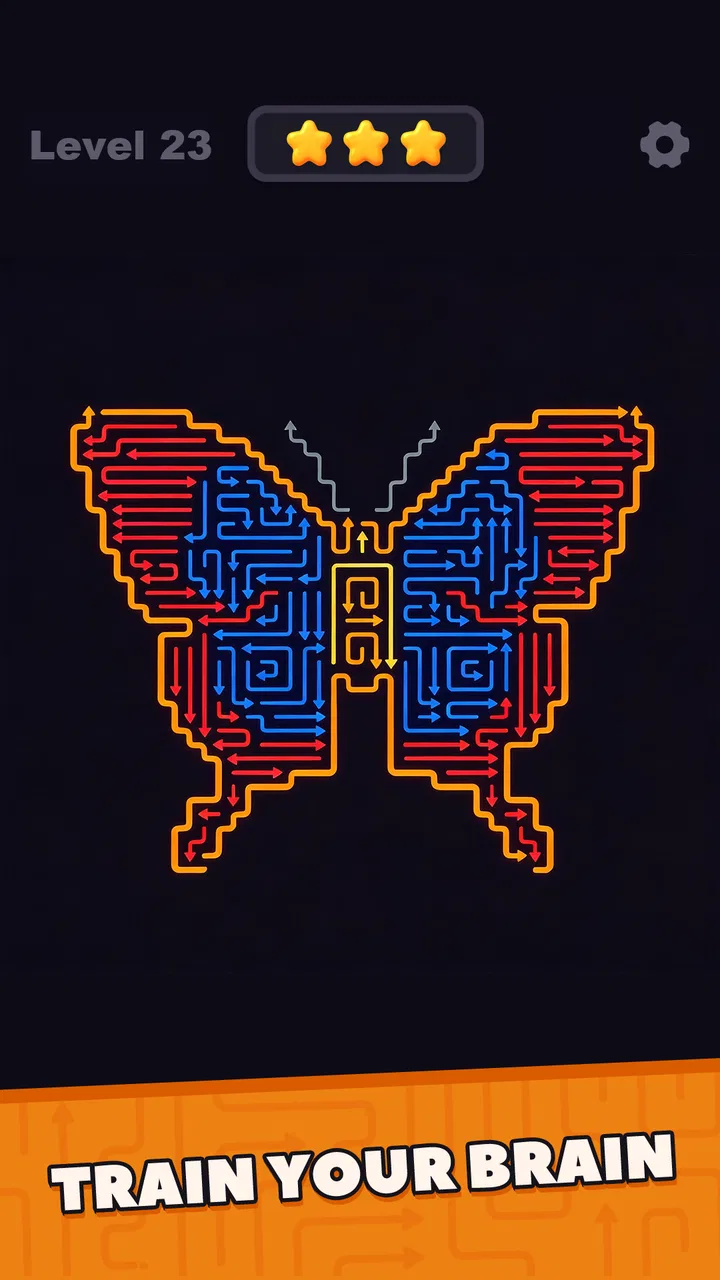
The opening experience is built around recognition. You see a maze-like layout filled with arrows, then begin tapping them to create an escape sequence. At first, the goal feels almost physical: follow the direction, remove the obstruction, and make space for the next arrow. After a few attempts, the game becomes less about tapping quickly and more about planning the order.
You May Also Like

 Blood Strike: 2.5 Anniversary
Blood Strike’s Loadouts Turn Every Drop Into a Tactical Gamble
A close look at Blood Strike’s custom loadouts: how fast access to signature weapons reshapes its battle royale rhythm, rewards preparation, and narrows the gap between fights.

 Pandora - Music & Podcasts
Pandora’s Music Is Easy to Start, but Harder to Recover
Pandora’s strength is its low-effort path from a seed to a station. Its weak spot is how much confidence it asks you to place in connection, setup, and quiet recovery.

 8 Ball Pool
 Is Built on Rivalries, Rematches, and Routine
A close look at the rivalries, rematches, shared routines, and unanswered safety questions that turn a quick pool match into a persistent mobile community.

 Samsung Music
’s Quiet Strength Is Playing What You Already Own
Its reach comes less from spectacle than from dependable access to a personal library. That simplicity is both the app’s strongest retention engine and its ceiling.

 AccuWeather: Weather Radar
AccuWeather Review: A Quick, Clear Forecast for Everyday Decisions
For everyday plans, the best forecast is the one you can understand quickly. AccuWeather makes rain timing, radar, and local conditions easy to act on, with a few trade-offs.

 Hill Climb Racing
Why Hill Climb Racing Still Turns Crashes Into One More Run
A tiny car, a bumpy hill and one more upgrade: Hill Climb Racing keeps resurfacing because its simple chaos makes every near-miss feel personal.
More From Our News Desk



That change is important. A puzzle can lose its appeal if the first idea always works, but Arrow Away has a natural source of tension in its arrow arrangement. One arrow may appear ready to move while another sits in the way. Clearing the obvious piece can either open the board or leave you with an awkward position. I found that the most satisfying early victories came from slowing down for a moment before touching anything.
The game also works well in short sessions. I can imagine opening it while waiting for an appointment, taking a few turns during a break, or playing one puzzle before putting my phone down. It does not demand the kind of uninterrupted attention that a story-heavy game needs. At the same time, the puzzles are active enough to prevent the experience from becoming background entertainment.
For a newcomer, the first useful habit is to scan the whole layout rather than chasing the nearest arrow. Look for pieces whose path seems completely open, then consider whether removing them exposes a second route. This is more reliable than tapping whatever looks easiest. It is also the first sign that the game’s challenge comes from sequencing, not from reflexes.
Why the simple control scheme still creates decisions
Tap controls are a good fit here because they keep attention on the puzzle itself. There is no movement pad to manage and no timing mechanic that turns a mistake into a finger-speed test. That makes the game approachable for casual players, children, and anyone who prefers thoughtful puzzles over fast action.
However, simple controls do not mean every tap feels harmless. The moment an arrow is selected, the board’s available options can change. I began treating each tap as a commitment instead of a casual experiment. That mental shift is one of the game’s strongest early lessons: the interface is uncomplicated, but the order of actions deserves care.
One practical approach is to divide the board into layers. I first inspect the outside edges, then the central paths, and finally the arrows that seem boxed in by several others. This does not guarantee a solution, but it reduces random tapping and makes the layout easier to read. Players who enjoy visual organization will probably appreciate this more than people looking for constant novelty or flashy action.
Progress signals without turning the game into a chore
Arrow Away gives progress a clear shape through successful puzzle completion. Each solved layout provides a small sense of closure, and that is enough to make another attempt feel worthwhile. I do not need a large story explanation to understand what I accomplished: the maze is clear, the arrows have escaped, and I can move on.
That kind of progress is modest, but it suits the format. The game’s central reward is the solution itself. When I solve a puzzle after initially choosing the wrong route, the satisfaction comes from understanding the arrangement rather than collecting a decorative prize. This is a healthier pacing model for a short puzzle game than constantly interrupting play with unrelated rewards.
There is also a useful distinction between finishing a puzzle and understanding it. Sometimes I can get close to a solution by following an obvious path, but the final pieces reveal whether I truly read the board correctly. That gives the game a quiet learning curve. I gradually become better at identifying dependencies: which arrow must move first, which one can wait, and which apparent opening is misleading.
Players wondering whether the game is suitable for a child should find the basic concept approachable because the content rating is Everyone and the controls are straightforward. The more difficult question is patience. A younger player who enjoys arranging objects and thinking ahead may have a good time, while someone who expects constant action could lose interest quickly.
The same applies to adults. I would recommend it to someone who wants a calm brain exercise, especially if they enjoy compact logic problems. I would not choose it for a long commute if I wanted a deep campaign, character development, or a large world to explore. Its progress is deliberately narrow: solve the next puzzle, learn from the arrangement, and continue.
Where the difficulty curve becomes more interesting
The difficulty does not need complicated rules to become more demanding. As the layouts become less immediately readable, the cost of acting on the first available option increases. I found myself checking several possible sequences before committing, which changes the rhythm from quick clearing to deliberate planning.
This is where the game’s relaxing description needs a little qualification. It can feel calming when I am in the right mood, but a puzzle that resists my first plan can also become mildly frustrating. The tension is not caused by a timer or frantic movement; it comes from realizing that I created a problem by choosing the wrong arrow too early.
My best advice for a difficult board is to stop tapping and reconstruct the dependencies visually. Ask which arrows have a genuinely open route, which routes are blocked by a single piece, and which pieces depend on several earlier moves. If the board feels confusing, restarting mentally is often better than continuing with a sequence that already looks compromised.
A second useful technique is to search for forced moves. If only one arrow can leave without colliding with another part of the layout, that arrow is usually a better starting point than a piece with several possible directions. After that move, scan again instead of assuming the original plan remains correct. This two-stage reading is more effective than trying to predict the entire solution in one glance.
That approach also shows why the game may appeal to puzzle fans who have grown tired of match-three repetition. In a match-three game, the board often changes through combinations and chance. Here, my choices are more directly responsible for the result. Compared with a word puzzle, Arrow Away asks for spatial planning rather than vocabulary. Compared with a traditional maze, it focuses less on steering through corridors and more on clearing a sequence of obstacles.
Those comparisons reveal the trade-off. Players who like discovering a precise order will find the format satisfying. Players who prefer open-ended experimentation, rich clues, or multiple solution styles may find the arrow-and-maze structure restrictive. It is a focused puzzle loop, not a broad collection of different puzzle genres.
How the pacing supports repeat play
The game’s retention comes from the natural urge to solve one more layout. A completed puzzle gives immediate closure, while an unsuccessful attempt leaves a specific question behind: where did the sequence go wrong? That is a stronger reason to retry than a vague promise of rewards because the player can identify the problem and adjust the plan.
Still, the same narrow focus can become a limitation over a long sitting. If I play for too long, the visual pattern of arrows and escape routes can start to feel repetitive. The game is at its best when used in small bursts, when each puzzle feels like a contained exercise rather than an endless obligation.
I also think the free model affects how I would approach it. The game itself is free, while in-app purchases are listed at $7.99 per item. That price makes it worth paying attention to the purchase screen before confirming anything, especially if the game is being used on a shared family device. I would begin with the free experience and decide only later whether any optional purchase genuinely improves my sessions.
For players who dislike monetization prompts, this may be a point to consider before installing. Even when the puzzles are enjoyable, a player can feel less relaxed if the surrounding purchase pressure interrupts the flow. I would keep notifications and spending choices in mind, particularly when recommending it to a child or to someone who wants a completely minimal phone game.
On the other hand, the low entry cost makes experimentation easy. I can try the core puzzle loop without committing money in advance. That is useful because Arrow Away’s appeal is quite specific. If I enjoy visual ordering and compact logic tasks, the free starting point is convenient. If I need a richer progression system, I will know quickly that this is not the right fit.
What the current release suggests about value
The current version is 1.0.8, and the game has already attracted over one hundred thousand installs. Its average rating is 4.9 from around eighteen thousand ratings, with 191 written reviews. Those figures suggest that the central idea is connecting with many players, but I would still treat the rating as a starting point rather than a guarantee. Puzzle preferences are personal, and a highly rated short-form game can still feel too repetitive for someone seeking a larger experience.
What I value most is that the game does not need an elaborate explanation to become playable. The developer, Flyfox Games, has chosen a concept that communicates through interaction. I understand the objective by trying it, and I can improve by observing how the board responds to each decision.
The strongest use case is a player who wants a quiet, self-contained challenge. It fits a short break better than a competitive session, and it gives enough resistance to make the break feel mentally active. I would also recommend it to someone who likes testing planning skills without studying a complicated rulebook.
I would skip it if my priority were online competition, a narrative campaign, character collection, or a large variety of mechanics. I would also look elsewhere if I wanted puzzles with a clear difficulty selector, extensive customization, or a long-term achievement structure. Arrow Away’s value is concentrated in the act of arranging escapes, so its success depends on whether that single idea remains enjoyable to you.
There is a useful middle ground for families. An adult can understand the rules quickly and help a child think through the order of moves without taking over the puzzle. Instead of giving the answer, I would ask questions such as, “Which arrow has a clear path?” or “What will this move uncover?” That turns the game into a short shared reasoning activity rather than simply handing over a solution.
My verdict on the progression and the overall fit
Arrow Away succeeds because its early goal, visible puzzle completion, and gradually more careful decision-making all point in the same direction. The game does not need to promise a huge journey. Its progression is the improvement in how I read each maze, and its challenge comes from making the correct escape order feel earned.
The pacing is strongest when I treat it as a series of short mental workouts. I can play casually, but I get more from it when I pause before each important tap. That small habit turns a basic control scheme into a proper logic exercise and helps prevent the frustration of blindly testing moves.
My main reservation is longevity. The focused format may not hold my attention indefinitely, and anyone sensitive to purchase prompts should review the spending choices carefully. The free download is an easy way to judge the fit, but I would not call it a universal recommendation for every puzzle player.
For me, the final verdict is positive with clear boundaries. Arrow Away is a good choice for calm, bite-sized spatial puzzles where planning matters more than speed. It is especially suitable for casual players, families looking for a simple thinking game, and experienced puzzle fans who enjoy solving order-based layouts. If that sounds like your kind of challenge, Flyfox Games’ compact arrow escape concept is worth trying; if you want story, competition, or a broad progression system, a different puzzle game will probably serve you better.
FAQs for Maze Clear: Tap Away Puzzle
01What is Arrow Away: Tap Escape Puzzle! about?
Arrow Away: Tap Escape Puzzle! is a captivating puzzle game where players must navigate through intricate mazes and avoid obstacles by tapping to redirect arrows. The goal is to escape each level by finding the optimal path, making it a perfect mix of strategic thinking and quick reflexes.
02Is Arrow Away: Tap Escape Puzzle! suitable for all ages?
Yes, Arrow Away: Tap Escape Puzzle! is designed for players of all ages. Its intuitive controls and progressively challenging levels make it accessible for younger players while still providing a satisfying puzzle experience for adults who enjoy strategic gameplay.
03What platforms is Arrow Away: Tap Escape Puzzle! available on?
Arrow Away: Tap Escape Puzzle! is available for download on both Android and iOS devices. You can easily find it on the Google Play Store for Android users and the Apple App Store for iOS users, ensuring a seamless experience across platforms.
04Are there in-app purchases in Arrow Away: Tap Escape Puzzle!?
Yes, the game offers in-app purchases. While the basic game is free to download and play, players have the option to purchase hints, extra lives, or unlock additional levels. These purchases are optional and designed to enhance the gaming experience but are not required to enjoy the game fully.
05How challenging is Arrow Away: Tap Escape Puzzle! for new players?
Arrow Away: Tap Escape Puzzle! starts with simple levels to help new players get accustomed to the mechanics. As you progress, the levels become increasingly challenging, requiring more strategic planning and quick decision-making, providing a rewarding experience for both newcomers and seasoned puzzle enthusiasts.
Pros
- Intuitive controls for quick learning.
- Visually appealing graphics and design.
- Engaging puzzles that challenge the mind.
- Smooth performance on most devices.
- Regular updates with new levels.
Cons
- Ads can be intrusive during gameplay.
- Limited hints may frustrate some players.
- In-app purchases can be pricey.
- Some levels feel repetitive over time.
- Requires internet for full functionality.

Maze Clear: Tap Away Puzzle
Gallery